
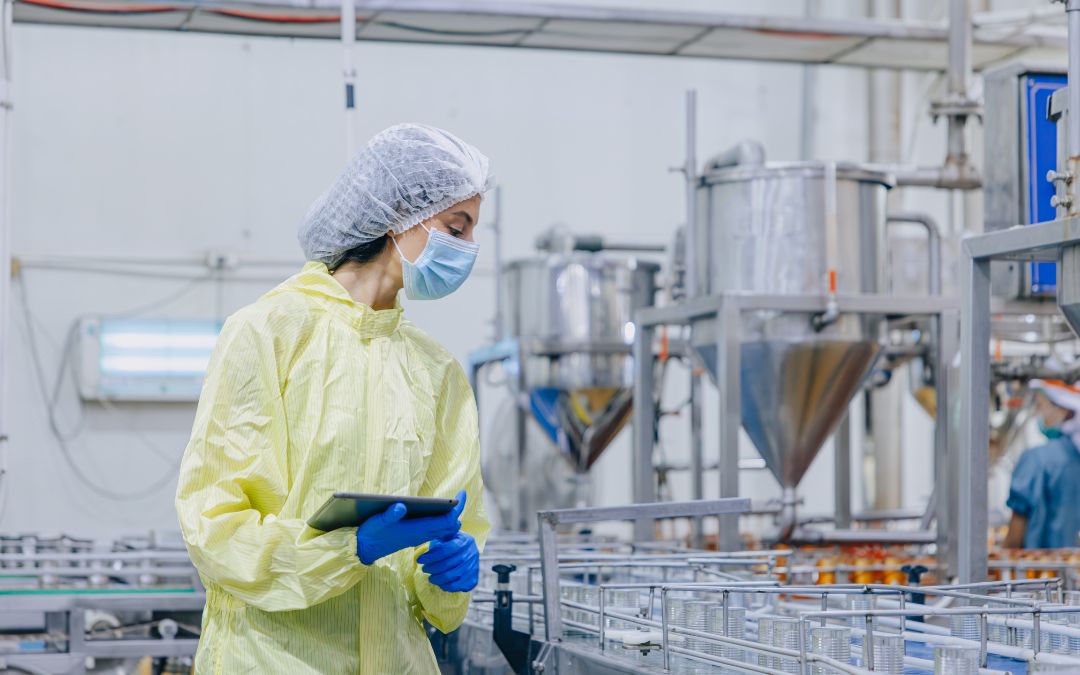
Food products and their production are increasingly coming into public focus. This also increases the demands on quality, safety, and process design in conveying technology. Those who convey bulk materials in food production must ensure gentle processing while preserving as many ingredients as possible, the most precise dosing, the avoidance of cross-contamination, and hygienic construction (Hygienic Design).
This guide shows what requirements the food industry places on conveyor technology, what materials are used, and how SEGLER implements these requirements in practice.
The food industry has specific requirements for conveyor technology. These include hygienic design, ease of cleaning, resistant materials, compliance with food safety regulations (like HACCP and FDA), gentle product handling, and often, the ability to operate in low temperatures or humid environments.
The food industry demands more from conveyor systems than just reliable transport. Key requirements include:
Hygienic Design The entire system must be designed to avoid product build-up, dead zones, and hard-to-reach areas. This is the only way to ensure cleanability and minimize the risk of contamination.
Product protection: The conveyed material must be protected from contamination by the environment. With SEGLER screw conveyors, the closed system operates dust-tight, watertight, and optionally gas-tight. This keeps the product free from moisture, dirt, and foreign particles.
Avoiding Delays: During formulation changes or when processing different media, no product residues must remain in the system that could contaminate the next product. Simple formulation changes require an easily accessible and fully cleanable design.
Precise dosage: In food production, ingredients and raw materials often need to be dosed precisely. screw conveyors enable this through the direct proportionality of screw speed and delivery rate. The volumetrically accurate delivery is suitable for feeding mixers, reactors, or filling systems and can often eliminate the need for expensive pre-dosing devices.
Operational Safety Food processing plants often operate in multiple shifts. The conveying technology must be low-maintenance and durable. With SEGLER screw conveyors, the screw shaft is the only major moving part, running primarily within the product itself, without direct abrasive contact with the housing. This reduces wear and extends service life.
What foods are transported by bulk conveying?

SEGLER promotes in the food industry a wide spectrum of media
- Flour, starch, gluten
- baked goods and pasta, baking mixes
- cereals, muesli
- Sugar, substitutes, and sweeteners
- milk powder, dairy products
- spices, table salt
- Extracts, flavors, enzymes
- cocoa, coffee, tea blends
- fruit (frozen fruit)
- mash, malt, spent grain, pomace, wine
- feed
- drinks
- Meat
The spectrum ranges from free-flowing, dry powders to moist, sticky, or paste-like masses.
What materials does SEGLER use for food-grade conveyor technology?
Stainless steel as standard
For all product-contacting surfaces in the food industry, SEGLER stainless steel is used. The product-contacting surfaces are finely ground to minimize adhesion and maximize cleanability.
The surface technology plays a central role: SEGLER operates separate blasting facilities for stainless steel and regular steel in separate halls to prevent material contact. Ceramic blasting media are used for stainless steel. Additionally, SEGLER has its own pickling and neutralization plant for stainless steel, allowing for weld seam treatment and passivation to be carried out in-house.

FDA-compliant plastics
Seals and slide elements in food-grade screw conveyors are made of FDA-compliant PTFE seals SEGLER. All plastics used are TSE/BSE and ADI-free. No screws or bearings that could come into contact with the conveyed material are installed in the product area.
How is SEGLER conveying technology constructed for the food industry?
No product-touched screws or bearings
SEGLER realizes food-grade screw conveyors without product-contacting screws or bearings. This eliminates dead spaces in threads and bearing housings that cannot be reliably cleaned.
Finely ground product contact surfaces
All surfaces that come into contact with food are finely sanded. The combination of pickling, blasting, and passivation takes place SEGLER under one roof, which ensures a continuously controlled process.
Closed conveying system
The dust, water, and optionally gas-tight conveying protects the conveyed material from contamination. At the same time, the closed system protects employees from emissions such as dust, odors, or the escape of gases. This increases workplace safety and makes it easier to comply with environmental regulations.
Explosion Protection (ATEX)
Many food powders such as flour, sugar, or starch are flammable and can form explosive mixtures in dust form. SEGLER Screw conveyors can be certified up to Zone 20 (dust-Ex) or Zone 0 (gas-Ex), including economical nitrogen inerting.
What special designs does SEGLER use in the food industry?
Window thread
For sticky or bridging-prone products, targeted cutouts in the screw wing ensure improved material exchange. They counteract lump formation and lead to effective self-cleaning.

Paddle thread
Adjustable paddles on the screw shaft intensively mix the material being conveyed. The paddle angle can be adjusted to control residence time and mixing effect. This is relevant for homogenizing baking mixes or mixing spice components.
Tempering screws (hollow blades)
A tempering medium (water, steam, thermal oil) is conducted through hollow waves or wings. This allows the conveyed material to be heated or cooled directly during transport. The cryogenic transport of frozen bacterial cultures from liquid nitrogen for yogurt production is a specific application example.

Multiwavelength Technology
For difficult conveyed materials, two or more intermeshing screws are used. Through the interlocking of the screw flights, the shafts clean each other. This significantly improves the transport of media that adhere strongly or tend to bridge. The volumetric conveying capacity reaches three- to four-digit cubic meters per hour.
What process steps does SEGLER cover in the food industry?
SEGLER applies its expertise in the Food & Feed sectors in the following process steps:
- Raw material acceptance and raw material management
- processing of raw materials
- Feeding and dosing, input and output
- Support financially
- Mixing, homogenizing, stirring, kneading
- Defrosting, heating, cooking, drying, cooling
- Maillard reaction
- dissolving agglomerates
- delivery
- storage
If necessary, SEGLER works with external partner institutes such as the German Institute of Food Technology (DIL), located in Quakenbrück, 20 km away.
Conclusion: Properly Design Material Handling Technology for the Food Industry
Conveyor technology in the food industry requires hygienic design, approved materials, and a deep understanding of process requirements. SEGLER combines over 100 years of mechanical engineering experience with the entire process chain, from development and manufacturing to commissioning, to realize customized plant solutions for the food industry.
Do you have a specific funding project in the food industry?